

My Weekly Rehab Review: Progress, Payments, and Next Steps
“Things are moving” is a hard update to use.
It might mean the crew completed the framing and the next trade is ready. It might mean people were on site all week, several rooms look different, and nobody can say which milestone is finished.
In my execution training, I teach a weekly review built around the current scope and trade plan. I want to know what was completed, what is unresolved, what is due for payment, and what the next trade needs.
That gives both the investor and contractor a useful conversation. It also helps prevent a Friday payment request from becoming the first time anyone notices a problem.
Start with the current plan
Have the latest scope, schedule, and recorded changes in front of you.
Ask which work was expected to finish during the week. Then compare that with what actually happened. Use locations and scope references rather than broad room names.
If the plan says framing in a particular area, check that area. If part remains incomplete, record what remains and whether it blocks the next task.
The purpose is to understand the project accurately. A short, honest update is more useful than a confident one that hides an unresolved dependency.
Use photos to prepare the review

I encourage contractors to send progress photos, and I thank them when they do. Good documentation helps me understand their work and reduces unnecessary back-and-forth.
Ask for a wide view that locates the work, plus closer views where needed. Match the images to the scope item and date. A collection of close-ups can look impressive without showing which area is actually complete.
Photos also have limits. They may not establish workmanship, concealed conditions, testing, or compliance. Arrange appropriate site checks and qualified review for those questions.
When I cannot visit, I discuss having a suitable local person check the property against the plan. Their role needs to be clear; a general progress visit is different from a technical inspection.
Check the work before discussing it as complete

In training, I describe a simple gate: evidence, quality review, and a clear punch list.
First, get the evidence of the claimed milestone. Then check whether it matches the agreed scope and applicable completion requirements. Record anything that still needs attention.
For visible finish issues, I like blue tape because it identifies the exact location. A run on one piece of trim is easier to find when it is marked than when someone remembers “there was a paint issue somewhere.”
Pair the physical marker with a written or photographic record. Tape can be removed; the project still needs a record of the item and its resolution.
Keep changes out of the casual conversation pile
Review each proposed or open change.
What caused it? Is it newly discovered work, a selection change, or an item from the original scope? Who needs to assess or price it? What decision is waiting?
Do not treat a discussion as authorization. Record the actual decision through the project's agreed process, including the effect on cost and schedule.
If you are still deciding whether to add an island, say that. The contractor should not have to guess whether “that would look good” means “go ahead and build it.”
Look at next week before ending this week
This is where a short review can prevent an avoidable delay.
Which trade comes next? Is the area ready? Are the approved materials available and checked? Are any inspections or other dependencies outstanding? Does the contractor need a final selection or drawing from you?
Assign each open action to a person and a date. “Need to order appliances” is a note. “Owner to confirm the selected models and delivery arrangement by Tuesday” is something you can follow up.
Use actual supplier information for lead times. A delivery window from a previous project is not a commitment on this one.
Keep contractor payments and lender draws distinct
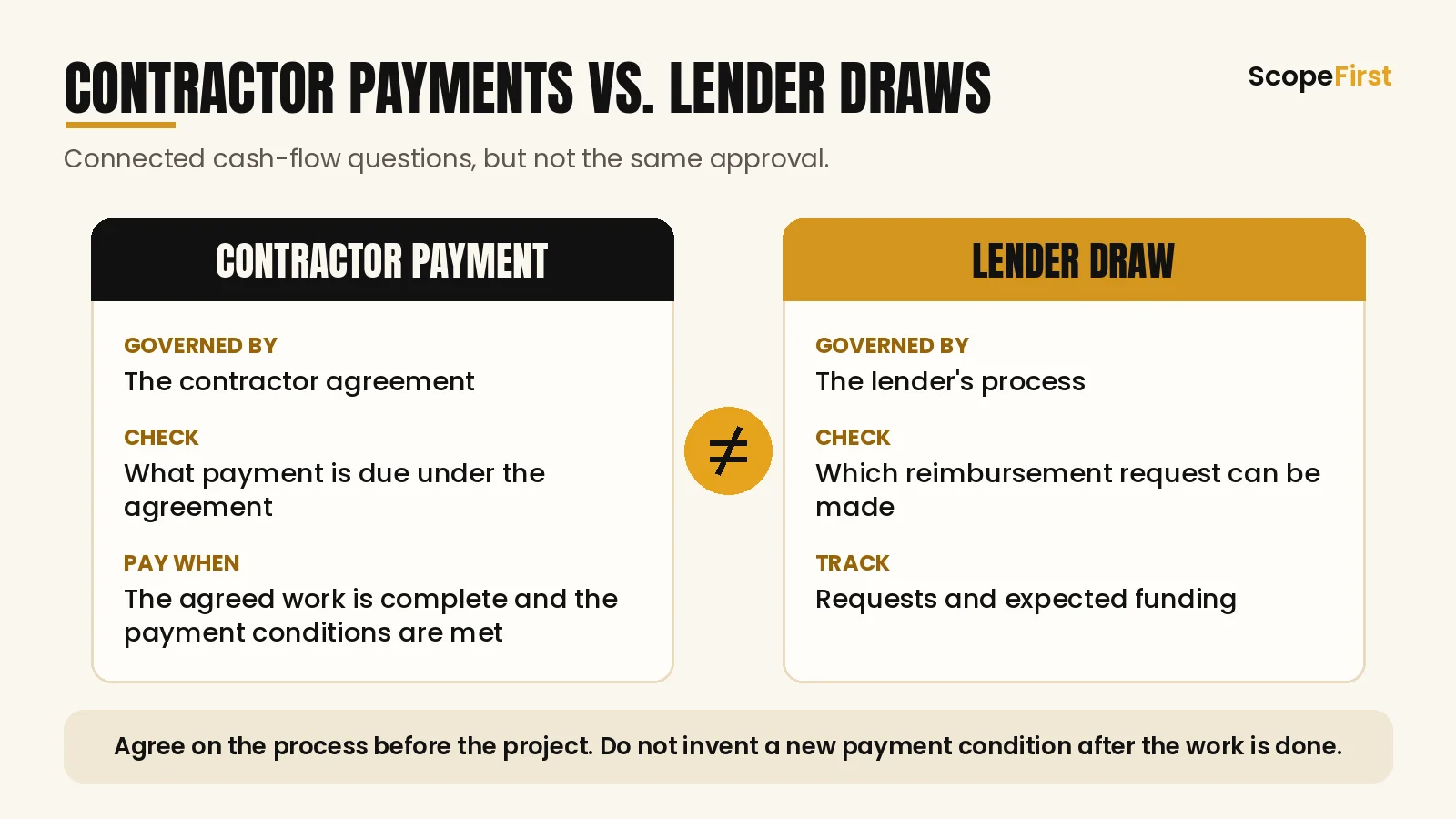
Check what payment is due under the contractor agreement. Separately, check which reimbursement request can be made under the lender's process.
They are connected cash-flow questions, but they are not the same approval.
If the agreed work is complete and the payment conditions are met, be organized about paying. In my training, I make the point that reliable payment helps build reliable working relationships. Your contractor has a business to run too.
Do not invent a new payment condition after the work is done. Agree on the process before the project and follow the actual contract and applicable requirements.
Copy this weekly review agenda

- Current scope and schedule version.
- Work planned versus completed.
- Evidence reviewed and site checks needed.
- Incomplete items and punch-list actions.
- Changes awaiting assessment, price, or decision.
- Contractor payments due under the agreement.
- Lender requests and expected funding.
- Next trade, materials, access, and dependencies.
- Named actions and dates.
Keep the record short enough to use every week. Send the relevant actions to the people responsible and resolve disagreements while the details are fresh.
The scope guide establishes the work you are reviewing. ScopeFirst helps with that starting documentation. The weekly review is how you keep the live project connected to it.