

Rehab Contingency: Separate Hidden Problems From Missed Work
I once walked a house too quickly because it looked like someone lived there, or had only recently moved out.
There was furniture. There were dishes and bathroom items. The water and power were off, and I let the appearance of the house fill in answers I had not actually checked.
That project brought several surprises, including a sewer-line cost I describe in training as $12,000.
I use that story when I teach contingency because experience does not make you immune to assumptions. Sometimes experience makes the shortcut feel more reasonable.
A rehab contingency is money reserved for uncertainty in the project. It should sit beside a properly defined scope, not serve as a catch-all for work you already knew the house needed.
Separate three kinds of cost

When a new expense appears, I want to know where it came from.
Known work belongs in the base scope and budget. If a visible, missing water heater needs replacing, put it in the work list and get it priced.
Unresolved or concealed conditions need a recorded assessment plan and an appropriate treatment of uncertainty. You may need further investigation before you can responsibly finalize the work.
Owner-selected upgrades are decisions. If you change the fixture or add an island, record the additional cost and any effect on the schedule.
All three can require cash. Keeping them distinct helps you understand whether the original scope was incomplete, the project revealed new information, or you chose to spend more.
An allowance is different from a contingency
An allowance usually puts a stated amount against an identified item whose selection or details are not final. A contingency addresses uncertainty across the relevant project risks.
Suppose the bathroom tile has not been selected. Ask the bidder to state the tile allowance, what quantity it assumes, and whether it covers material alone or installation too.
Now suppose an inaccessible area may require repair after opening. That needs its own discussion about assessment, scope, pricing, and authorization.
Putting both into one unexplained number makes the budget harder to review. You cannot tell which decisions still need making or what the money is supposed to cover.
Do not choose a percentage before looking at the risk
In my training, I discuss percentage buffers as planning examples. They are not a guarantee that a particular property has enough contingency.
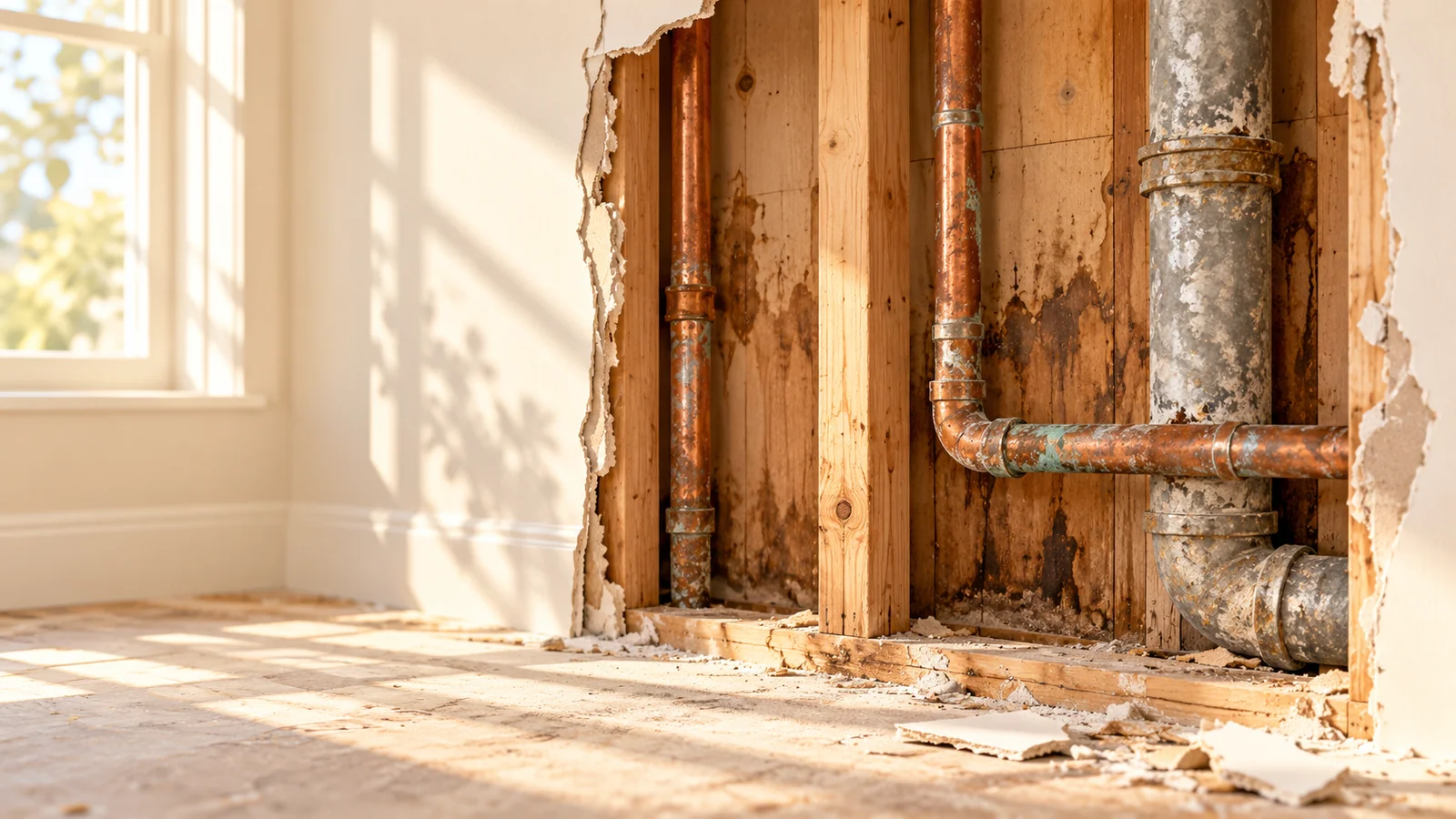
A house with untested systems, restricted access, visible damage, or a large amount of concealed work creates different uncertainty from a well-documented, limited project.
Start with the unanswered questions. What can be investigated before purchase or before the next stage? What has to wait? Which uncertainty could materially change the plan?
Then work through the reserve with the relevant contractors and your financing requirements. A percentage can summarize a decision; it cannot do the investigation for you.
Keep a short uncertainty register
For each unresolved item, write:
- Location and observed condition.
- What is unknown.
- Who will assess it.
- When the answer is needed.
- Which work depends on the answer.
- How the current price treats it.
- What process applies if additional work is required.
This is especially useful when utilities are off or access is limited. Record the limitation directly. A room that looks occupied does not establish that its systems work.
For potentially significant concerns, arrange qualified assessment. A scope checklist organizes the questions but does not replace that work.
Review contingency use as the project moves
Here is an illustrative example.
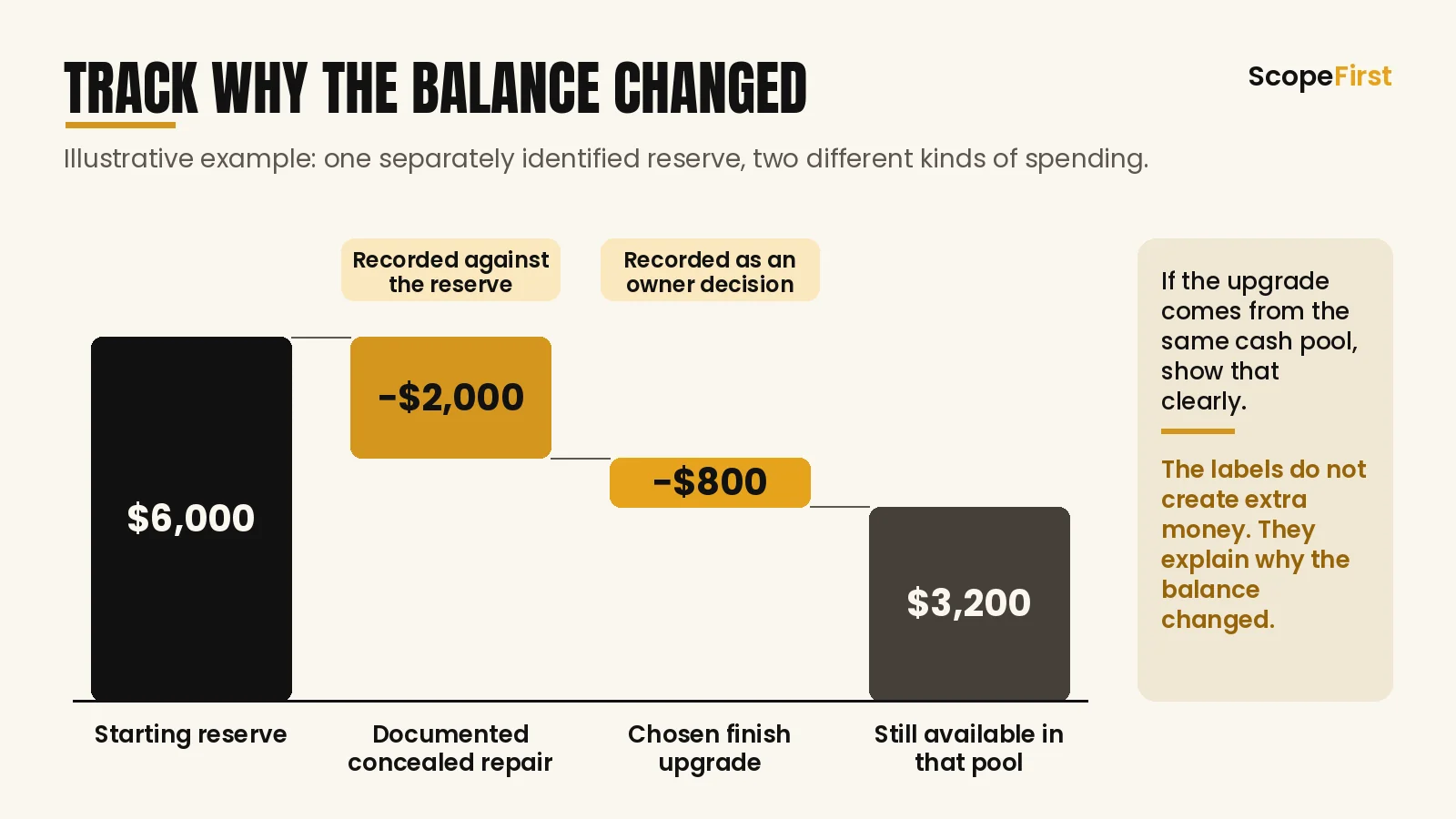
You start with a separately identified $6,000 reserve. A documented concealed repair uses $2,000. Later, you choose an $800 finish upgrade.
Record the repair against the reserve and the upgrade as an owner decision. If you also fund the upgrade from that same cash pool, show that clearly: only $3,200 remains available there.
The labels do not create extra money. They explain why the balance changed.
That distinction matters on the next property. Otherwise, a discretionary upgrade can make you think your repair estimate was wrong, while a recurring scoping omission can hide among legitimate surprises.
Investigate the expensive unknowns early

The sewer lesson changed the way I think about uncertainty. If a question can be answered through an appropriate inspection or assessment before committing, compare that effort with the consequences of staying uninformed.
Do not assume an insurance or service product will solve a known problem. Coverage, exclusions, eligibility, waiting periods, and limits need their own review. I have discussed products I used in training, but those historical examples are not current coverage promises.
The same principle applies to financing. Check how your lender treats contingencies and changes before relying on those funds.
Let the next scope benefit from the last project
At closeout, look at the costs you did not expect. Which were genuinely concealed? Which came from incomplete selections? Which were visible but never written down?
Update the walkthrough process where it failed. Keep a realistic reserve for the uncertainty that remains.
Use the rehab scope guide to document the known work, and the scope-versus-estimate explanation to keep pricing assumptions visible. ScopeFirst helps organize that starting record. The contingency still needs an honest decision about the particular property.