

Flip, BRRRR, or Turnover: Set the Rehab Finish Standard

Before I choose a countertop, I want to know what the house is supposed to become.
A flip, a BRRRR rental, and a routine turnover may use some of the same products. They do not automatically need the same renovation.
The exit strategy gives the scope a purpose. It helps you decide which work supports the plan, which selections deserve more attention, and where you are adding cost because you happen to like something.
In my training, this is the first of the five laws: know your exit before you write the scope.
On a flip, study the competing finished houses
I want to understand the properties a buyer will compare with mine. That means looking beyond a sale price and noticing layout, condition, finish choices, and the overall package.
A high-end product in one room does not fix a poor layout or unfinished work elsewhere. Likewise, copying a fashionable kitchen from a different market is not evidence that the cost belongs in this project.
Document the finish standard you intend to deliver. Use product references and photos where they help. Give the contractor something more specific than “make it nice.”
In the training, I talk about the importance of meeting the market. That means researching the actual competing properties, not automatically choosing the most expensive finish.
On a BRRRR, I want a repeatable rental specification
For my rental projects, I prefer a consistent package I can understand, order, and maintain.
I have talked about using basic granite options in my own kitchens. That is a description of my practice in those projects, not a rule that granite is right for every rental or that one countertop guarantees a particular appraisal.
The larger point is repetition. Once you have a suitable finish package, you do not need to restart the entire selection process on the next similar house.
Keep the product name, model, finish, supplier, and an acceptable replacement together. If the product goes out of stock, review the substitute deliberately instead of allowing an unrecorded change at checkout.
Do not confuse appearance with condition
A rental can look good in photos and still have significant maintenance waiting behind the finishes.
That is why I keep returning to the roof, foundation, HVAC, plumbing, and electrical systems. If a qualified assessment identifies work that belongs in the plan, a nicer backsplash does not remove it.
In the training, I also discuss appraisal condition categories. An investor's desired condition rating is not a guaranteed outcome, loan approval, or valuation. Ask the relevant professionals what applies to your property and financing.
Fannie Mae's comparable-sales guidance identifies factors including location, room count, finished area, style, and condition. That supports a broader review than simply counting upgraded products.
A turnover starts with the property you already have
When an existing rental turns over, my starting point is the condition record and the established standard.
What needs cleaning? What needs repair? What is damaged or no longer suitable? Which items can remain?
A turnover can become a bigger renovation if you allow every room to start a new design conversation. Keep optional upgrades separate so they can be assessed on their own merits.
That does not mean overlooking safety, required repairs, or applicable rental standards. It means identifying the work the property needs and distinguishing it from a preference you just developed during the walkthrough.
Write one finish sheet before requesting bids
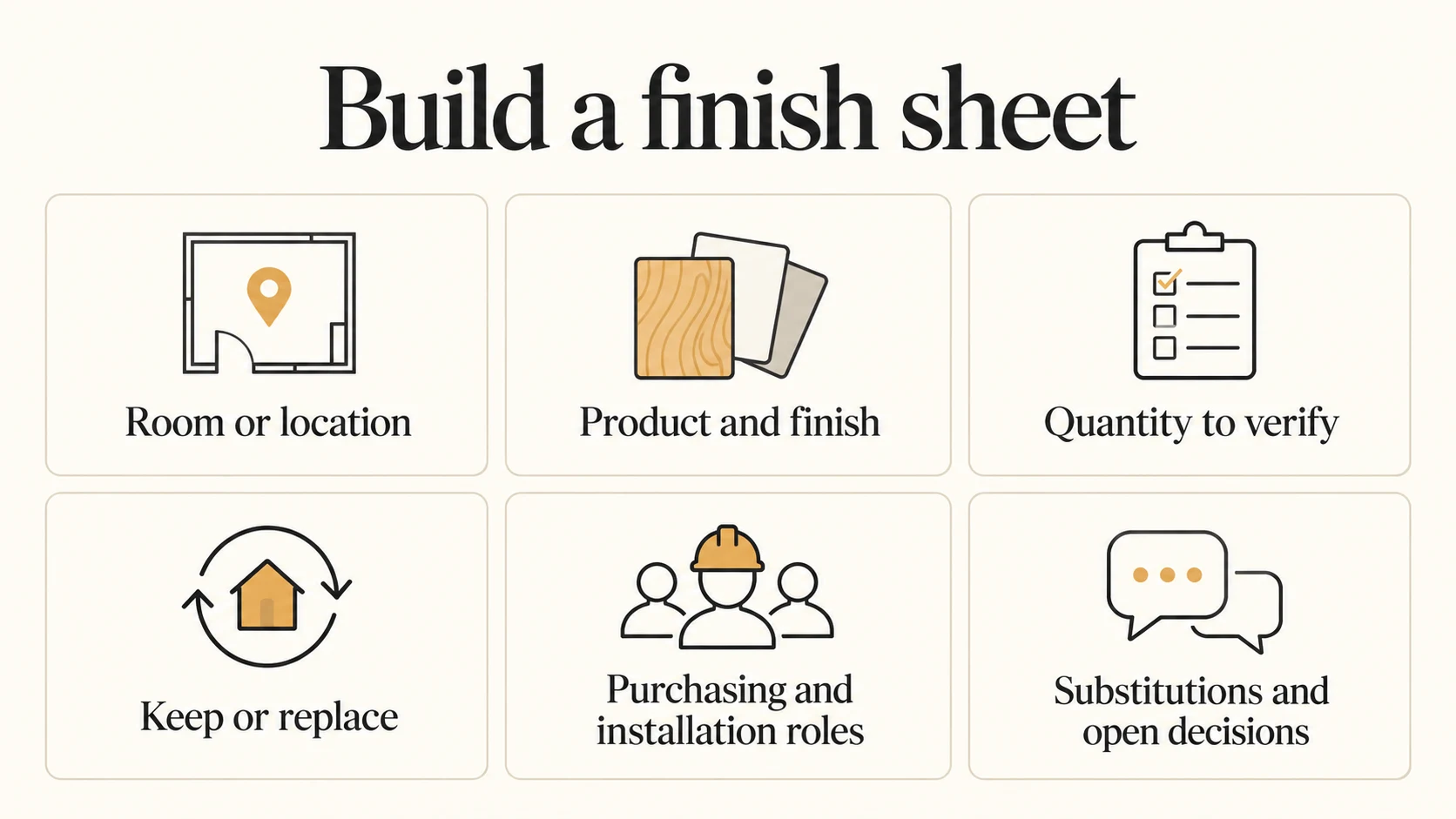
For each relevant item, record:
- Room or location.
- Product, material, model, and finish.
- Quantity and verification status.
- Whether the existing item stays or is replaced.
- Who selects, orders, receives, and installs it.
- Approved substitute process.
- Open decision and the date it needs resolving.
If the exact selection is pending, identify the pricing basis and what happens when the selection is made. “Standard fixture” is not specific enough unless the actual standard is attached.
Here is an illustrative decision: the existing bathroom vanity remains, its condition is documented, and the contractor prices only the defined repair and finish work. An alternative replacement is quoted separately. That keeps a possible upgrade from silently becoming part of the base scope.
Test the whole plan, not one attractive item
When a selection changes, check the related work. A different appliance can affect dimensions. A different finish can affect preparation or installation. A cheaper product might carry a delivery delay that matters more than the sticker-price difference.
Look at the complete package and ask the installer about the implications. Keep the change visible in the scope and purchasing record.
I want these decisions made while there is time to compare options calmly. The day a trade arrives is a poor time to discover nobody selected the product.
Keep your taste in its proper place
There is nothing wrong with enjoying design. The investment still needs a defined customer, a usable property, and a costed plan.
For me, a repeat rental specification makes the business easier to run. For a flip, a deliberate finish standard helps keep the project aligned with the market I researched.
Use the scope checklist to make those decisions concrete. ScopeFirst helps document the property and intended work so the finish choices reach the people pricing and building it.