

Your Real Estate Buy Box Needs a Renovation Limit
“I buy rentals in Kansas City” gives someone a city and an asset type. It does not tell them much about the next property I should buy.
Which part of the market? What size of house? What price range? How much renovation? Will I take on structural work? Can my team execute the project?
A real estate buy box is the set of criteria you use to decide which properties deserve further analysis. In my training, I organize it around three filters: geography, numbers, and renovation scope.
The third one gets overlooked. A property can appear attractive on a spreadsheet and still require work your current team cannot handle.
Filter one: where can you operate effectively?

Start with a defined market area you understand and can support.
For a local operator, I like a manageable area where oversight is practical. In the training, I discuss roughly an hour's drive as a personal starting preference, not a rule for every investor.
If you invest remotely, you need a different support plan. Who can visit the property, check progress, arrange specialist follow-up, and deal with a site problem?
Research actual sale and rental evidence in the relevant market. A citywide average can conceal differences between the properties you are considering. Use property characteristics and credible market data rather than assumptions about the people who live in an area.
The goal is to know where your operating plan works.
Filter two: what numbers does the property need to support?
Write down your acquisition range, renovation capacity, likely financing structure, operating costs, and required outcome.
For a rental, include vacancy, maintenance, capital expenditure reserves, management where applicable, taxes, insurance, and debt service in the analysis. A rent figure minus a mortgage payment is not a complete operating picture.
For a flip, include the relevant purchase, renovation, financing, holding, and sale costs. Test what changes if the schedule runs longer or the eventual sale price is lower.
Use current quotes, local evidence, and actual lender terms. The example prices and loan percentages in a training video are not approval terms for your next deal.
Filter three: which renovation can your team execute?
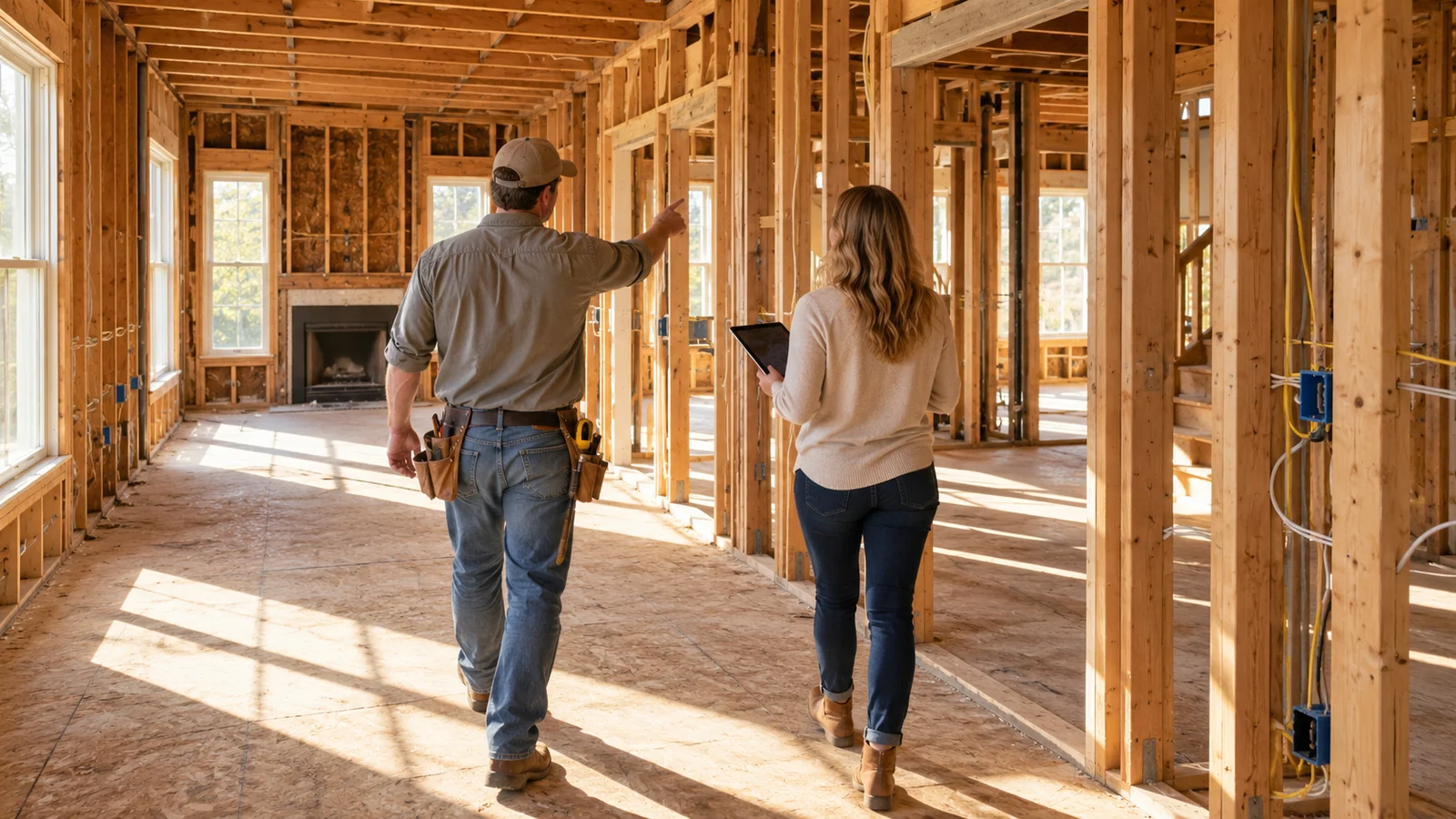
This is where I want a clear answer.
Are you looking for cosmetic work? Moderate renovations? Full guts? Will you consider foundation work, major electrical replacement, or properties needing specialist environmental assessment?
If you do not have the people, experience, or resources for a category, put it outside the current buy box.
That is not a permanent limitation. You can expand when your capability changes. But buying the house first and hoping to build the team afterward adds a problem you could have screened earlier.
In my training, I explain that moderate rehabs became a good fit for my BRRRR operation. That was a fit between the properties, my team, and my process. It is not a recommendation that every investor choose the same level of work.
A bedroom count taught me to look harder
I describe an early Kansas City property where I paid $55,000, renovated for $20,000, and expected an after-repair value of $140,000. The appraisal came back at $110,000.
I had focused on turning a large living area into an additional bedroom and had not paid enough attention to the property's size when reviewing comparable houses.
Those are historical figures from my account of the project. The useful lesson is not a current price benchmark. It is that one attractive feature does not make another house a sound comparable.
Fannie Mae's comparable-sales guidance considers multiple characteristics, including finished area, room count, condition, style, and market area. Bedroom count alone is not enough to support a valuation assumption.
Write the criteria so someone else can screen a lead
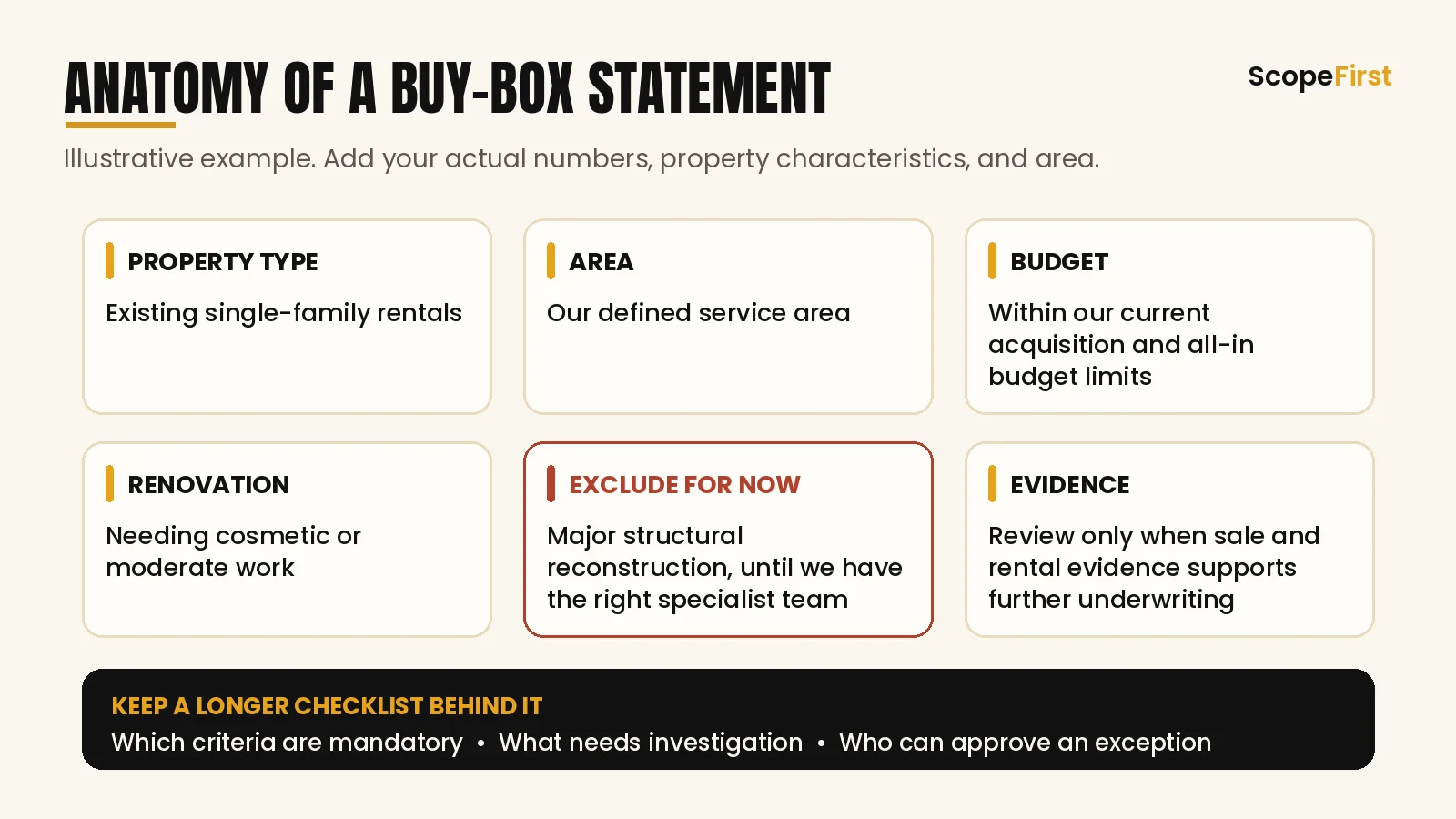
Here is an illustrative buy-box statement:
Existing single-family rentals in our defined service area, within our current acquisition and all-in budget limits, needing cosmetic or moderate work. Exclude major structural reconstruction until we have the right specialist team. Review properties only when the available sale and rental evidence supports further underwriting.
That still needs your actual numbers, property characteristics, and defined area. But it gives a sourcing partner useful boundaries.
Keep a longer checklist behind the short statement. Record which criteria are mandatory, which need further investigation, and who can approve an exception.
Reject obvious mismatches early
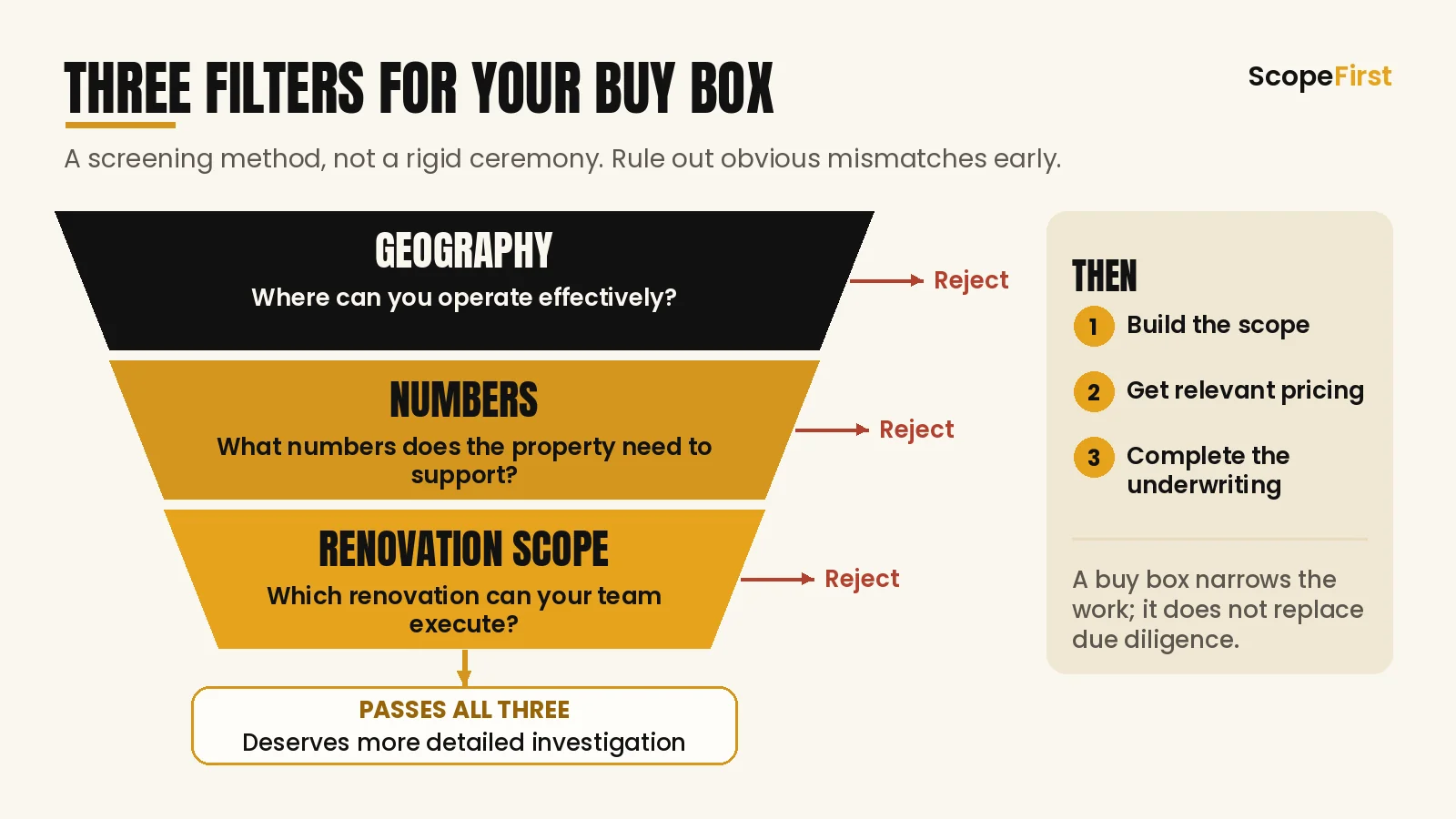
If a listing clearly shows a full gut and you only take cosmetic projects, you do not need to spend an hour refining its paint budget.
The three filters are a screening method, not a rigid ceremony. Geography can rule something out quickly. So can renovation complexity. Properties that pass deserve more detailed investigation.
Then build the scope, get relevant pricing, and complete the underwriting. A buy box narrows the work; it does not replace due diligence.
Change the buy box deliberately
After a run of leads, review why you passed and what you learned. Perhaps your pricing assumptions need updating. Perhaps the area is too broad. Perhaps the team can now handle a category you excluded.
Change one criterion because you have evidence. Avoid quietly rewriting the rules every time a property looks exciting.
Use the rehab scope guide for the properties that make it through. ScopeFirst helps document the work so the renovation filter becomes a real plan rather than a label such as “light rehab.”