

Rehab Draw Schedules: Plan the Cash Before Work Starts
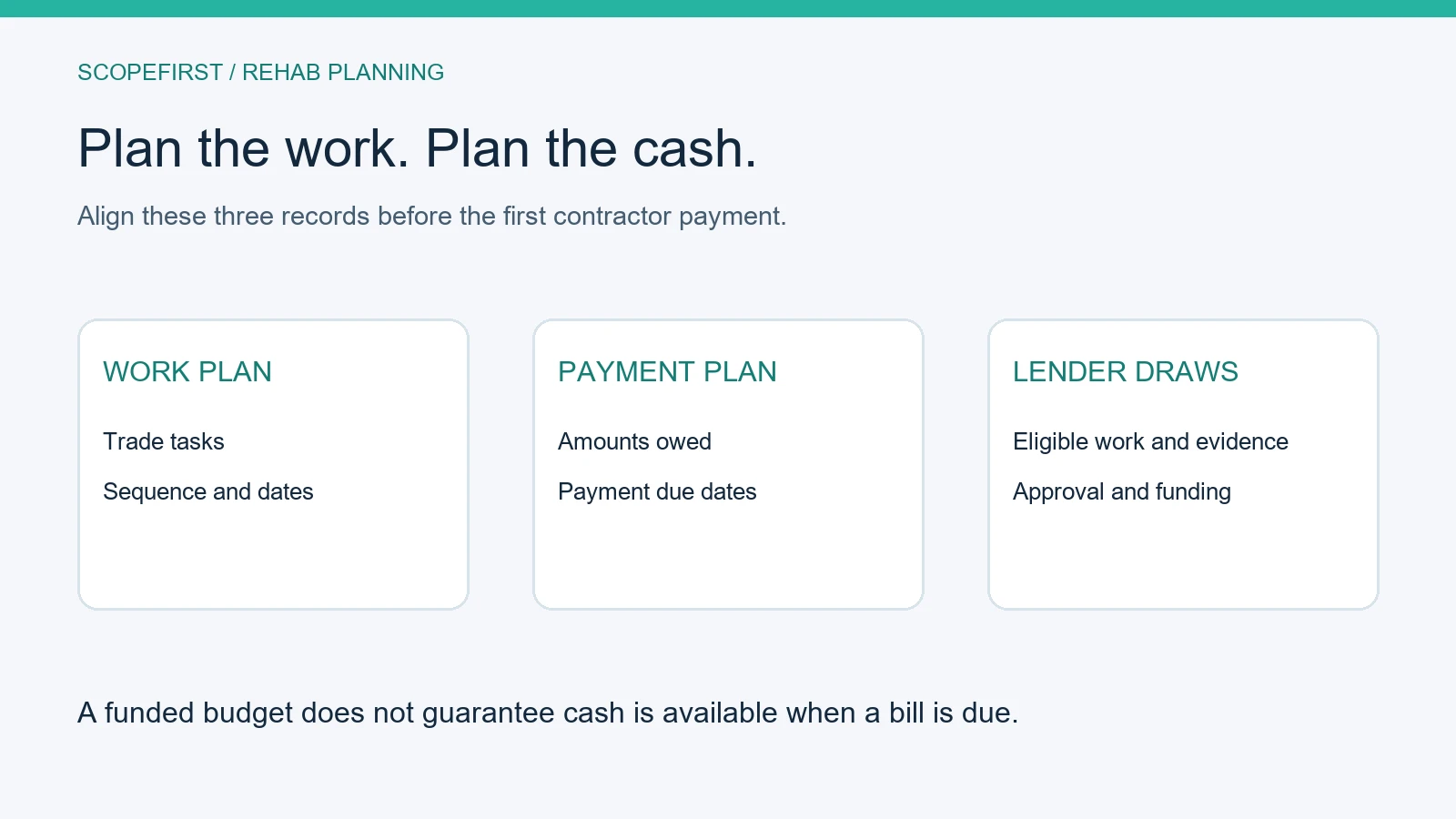
A renovation can have money allocated to it and still run short of cash this week.
That catches investors when they hear “rehab funds available” and assume the money will arrive whenever the contractor asks for it. Then Friday comes. The crew needs paying, the materials have already been purchased, and the lender has not approved the next draw.
In my lender-ready scope training, I spend time on that gap. Before work begins, I want the scope, contractor payment plan, lender draw process, and available cash considered together.
A rehab draw schedule is the agreed process for releasing renovation funds as the project progresses. Your lender's requirements determine how that process works. A detailed scope helps you discuss it; it does not override the loan documents.
A completed room may be too large a milestone
Think about everything inside “kitchen remodel.”
Demolition happens early. Then there may be framing, rough trade work, inspections, wall finishes, cabinets, countertops, and final installation. Those costs arrive at different times.
If the approved draw category requires the whole kitchen to be complete, you may have to fund a lot of work before reimbursement. In training, I contrast that with a kitchen broken into its actual trade tasks.
The useful question for the lender is: Which completed portions of this work can qualify for a draw, and what evidence do you require?
Do not assume every line item will earn a separate payment. Ask before closing and get the approved arrangement in writing.
Keep three records side by side
I want to see the work plan, the contractor payment obligations, and the lender reimbursement rules together.
The work plan shows the sequence and expected completion dates.
The contractor agreement shows what you owe, when you owe it, and what must happen before a payment is due. Deposits and progress payments need to reflect the actual arrangement and applicable requirements.
The lender record shows eligible costs, documentation, inspection arrangements, approval steps, fees, and disbursement timing.
Those records will not necessarily use identical categories. Make the relationship clear enough that you can explain how the next payment will be funded.
A simple cash-gap example
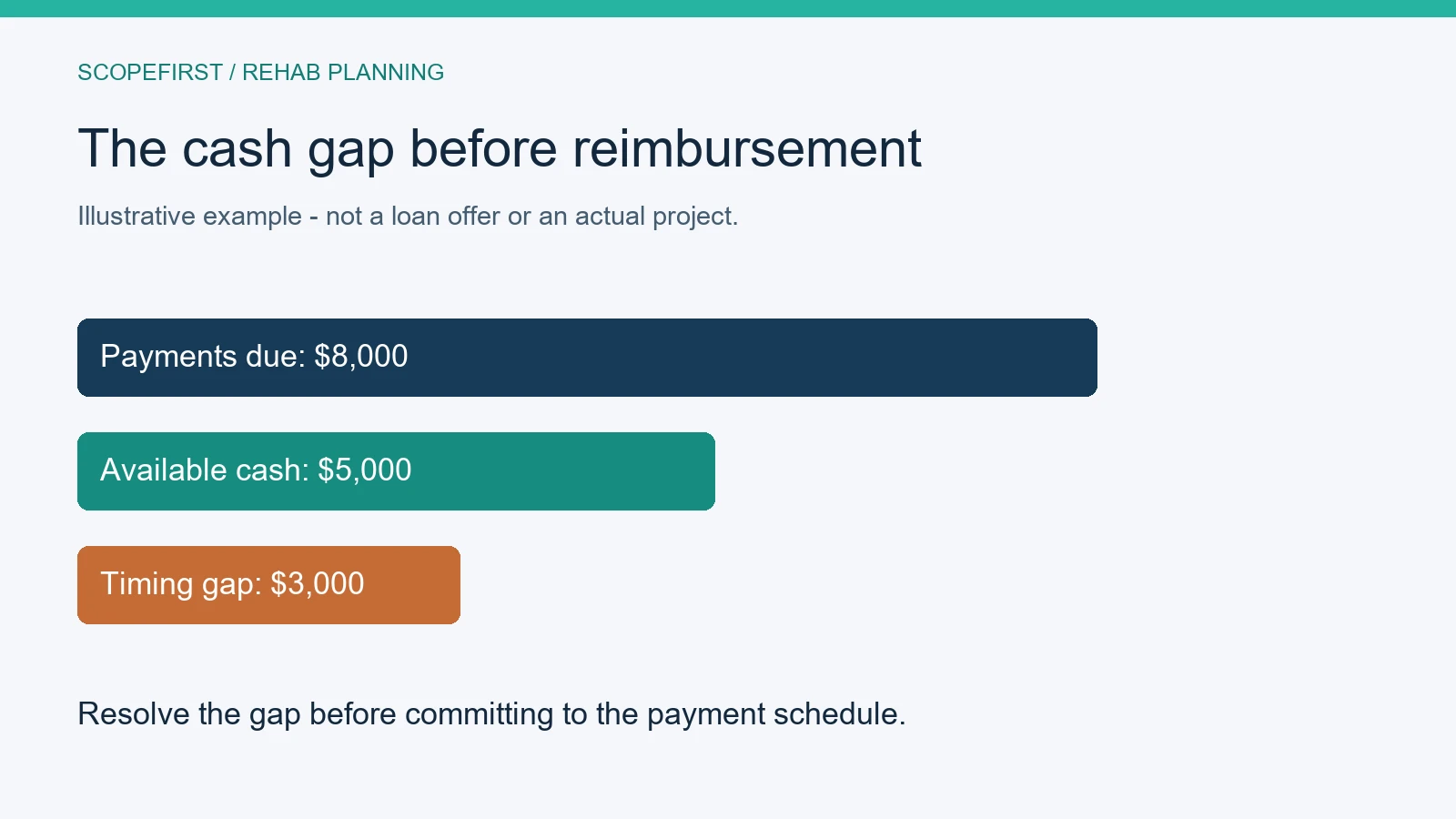
Here is an illustrative example, not a loan offer or a project from my portfolio.
Suppose the next stage creates $8,000 in payments due before the lender's expected reimbursement. You have $5,000 in cash allocated and available for that stage. That leaves a $3,000 timing gap.
The project may still fit its total renovation budget. It does not have enough available cash for that particular sequence.
You need to resolve that before promising payment. The options depend on your agreements: available reserves, a lender-approved draw arrangement, or a genuinely revised work and payment plan. Hoping the inspection happens faster is not a funding plan.
Also test what happens if reimbursement takes longer than expected. A date in a spreadsheet is only as useful as the assumptions behind it.
Ask the lender these questions before construction
- Is funding based on completed work, materials, or another approved measure?
- Which documents support each request?
- Who arranges the inspection, and what does it cost?
- What happens if part of a category is incomplete?
- How are scope changes and budget reallocations approved?
- Are there minimum draw amounts, holdbacks, or limits on frequency?
- When should I expect funds after an acceptable request?
- What needs to be resolved before the final draw?
For a concrete example of a lender-specific process, LendingOne's published FAQ describes inspection of completed work as part of its draw process. Use your own lender's requirements for your project.
An inspection for a draw also should not be assumed to replace any required municipal inspection or your own review of the work.
More draws can mean more costs
In the training, I explain the tradeoff between fewer larger draws and more frequent smaller ones.
More frequent reimbursement may reduce the amount you need to carry between payments. It can also mean more inspection fees and administration. Waiting longer between draws can reduce some transaction costs while increasing the cash you need available.
There is no universal ideal number of draws. Your liquidity, lender rules, project duration, and fees matter.
Build a simple forecast by week. Show payments due, approved funds expected, and the balance remaining. Keep uncertain receipts visibly uncertain rather than treating every requested dollar as cash already in the account.
Make each request easy to understand
Use the current scope version and identify the work completed. Attach the requested records and photos with clear locations. If something is incomplete, say so. If there is a change, follow the lender's approval process rather than silently moving numbers between categories.
Accurate documentation protects the discussion on both sides. It also makes it easier to spot a missing item before someone relies on it.
Start with the rehab scope checklist, then ask the lender how that work should appear in the approved draw schedule.
ScopeFirst helps organize the underlying scope. The cash forecast and lender approvals still need their own attention. I want that work done before the first contractor payment, while there is time to fix a gap calmly.
.jpg)