

Who Should Buy Rehab Materials? My Hybrid Ordering System

I get asked who should buy the materials on a rehab: the investor or the contractor.
My usual approach is to control the finish selections and pay for the materials, while letting specialty trades supply the systems they are installing. The contractor helps identify and collect the rough materials. On projects where the finish choices matter more, I order those products myself.
That works for the way I run projects. It also gives me work to do. If you want someone else to handle ordering, returns, deliveries, and coordination, compare the cost of that service honestly.
There are several workable models. The trouble starts when you choose one without telling the other person.
First, a markup is not automatically a rip-off
In my materials training, I use a vanity to explain this.
An investor sees a $200 vanity at the store, then sees a much larger number in the contractor's proposal. It is easy to assume the difference is pure markup. But the contractor may also be covering fittings, assembly, small supplies, collection, or other work inside that number.
Those are example figures, not a pricing guide. The point is to ask what is included before deciding that someone is taking advantage of you.
I have worked on the contractor side and the investor side. Both need a process that lets them do their job and get paid fairly.
Four ways to handle the purchase
1. Contractor selects or collects; investor authorizes payment. This is the phone-sale approach I discuss in training. The contractor gets the approved materials together and the investor pays through the store's supported process. Confirm how your supplier handles authorization; do not assume every branch offers the same arrangement.
This keeps the purchase visible, but you need to be available. A call from the checkout while you are in another meeting is a predictable problem if nobody agreed on a purchasing window.
2. Investor orders finishes; contractor handles the rough-material list. This is my preferred hybrid approach for projects with more deliberate finish selections. I choose the visible products and order them. The contractor identifies the building materials needed for the work, and I pay through the agreed process.
3. Contractor supplies the full package. One party handles labor and materials. This can be useful when you need more coordination included in the service. Confirm selections, allowances, substitutions, and purchasing responsibilities before comparing the total with another model.
4. Contractor buys; investor reimburses under an agreed arrangement. The contractor provides receipts, and the purchasing or trip charge is agreed in advance. It can be transparent, but only if returns and credits come back into the same record.
The cheapest-looking product total does not settle the decision. Somebody still has to do the coordination.
Why I separate specialty trades
I usually let the relevant specialty contractor supply their own system materials. HVAC is a good example. I want the company responsible for the system to confirm what it needs and price the package.
The same principle can apply to roofing, plumbing, electrical work, countertops, and other specialist packages. The exact division depends on the contractor and the job.
Before buying something yourself, ask the installer to confirm the product, compatibility, quantity, related components, and effect on their installation or warranty terms. An online bargain becomes less attractive if it does not fit the work.
Finish selections belong in the scope
Imagine the contractor prices one flooring product while you are picturing another. Nobody has to behave badly for that to create an argument.
Write down the product or selection basis before the bid. If it is undecided, make the allowance explicit and ask what it covers. A material allowance and an installed price are different things.
For repeat rentals, I like having a consistent finish package. For flips, I pay closer attention to what the relevant competing properties offer. Either way, the selection should support the property and its intended use.
I also have a personal rule about windows and appliances: I order them and arrange delivery. Windows can break, and appliances are heavy. That is an operational preference from my system, not a requirement every investor must copy.
Put six names beside every important purchase
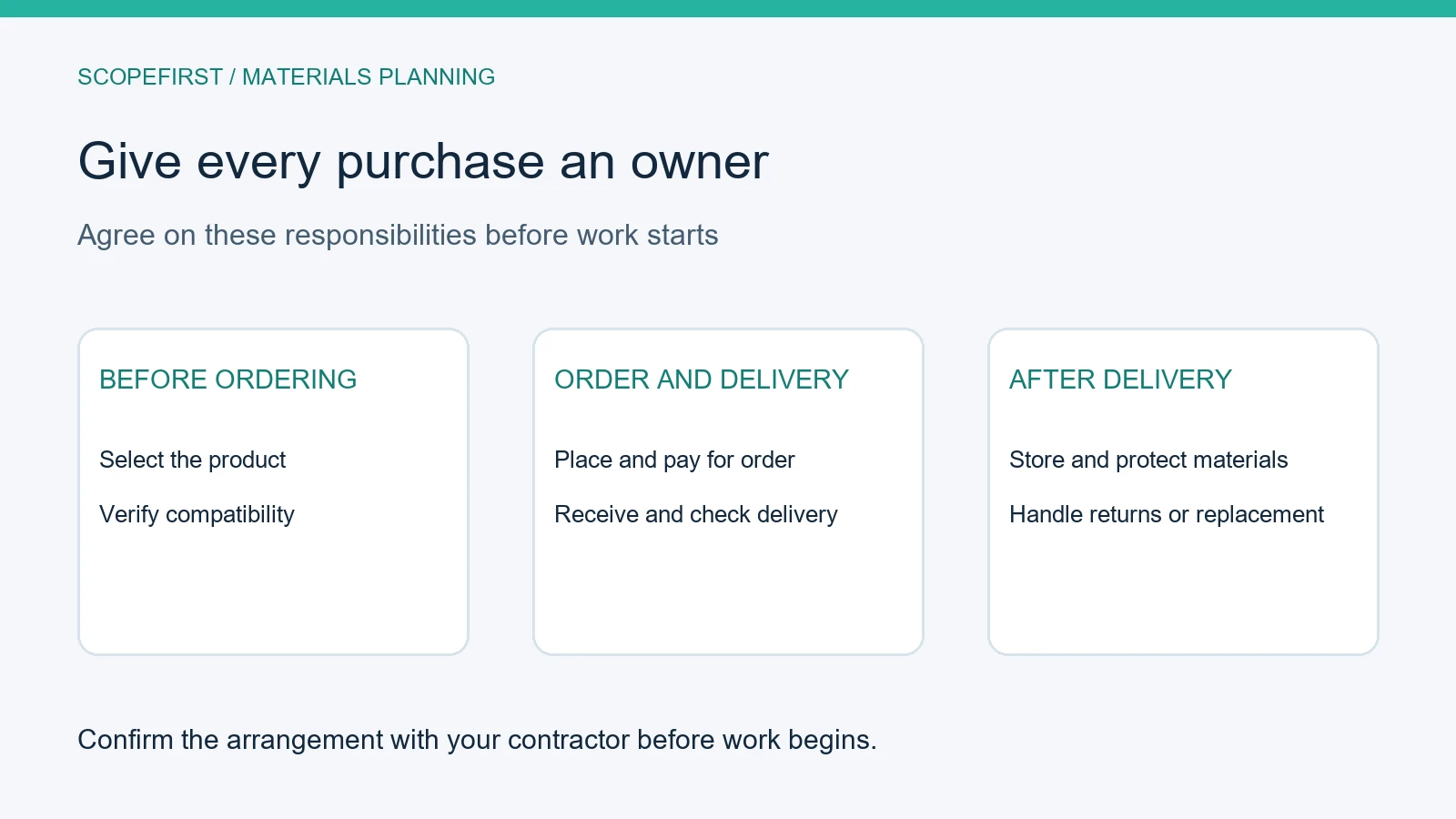
A material list becomes much more useful when it answers:
- Who selects the product?
- Who verifies it will work?
- Who places and pays for the order?
- Who receives and checks the delivery?
- Who stores and protects it?
- Who handles a return or replacement?
One person can fill several roles. Leaving the roles blank is where the handoff gets expensive.
Keep the approved product reference, quantity, room, required date, order confirmation, and receipt together. If a finish changes, update the scope and ask whether related labor changes too. Owner supply does not automatically eliminate change orders.
Agree on the model before work starts
Have the conversation while the contractor is deciding whether to take the project. Ask whether they are comfortable with your purchasing process and what they need from you to keep the work moving.
Then compare complete packages: materials, labor, delivery, handling, and your own coordination time. My preference is control, but control has responsibilities attached.
Use the rehab scope checklist to connect each purchase to actual work. ScopeFirst gives you a place to start that documentation; a separate purchasing record handles the orders, receipts, and returns.
.jpg)